
Why We Keep Getting Human Diet Wrong (Part 3)
The Real Reason Diets “Work” Has Nothing to Do With Food: Diets don’t work because of food alone. This article reveals how carnivore, vegan, and elimination diets may improve health by regulating the nervous system, not by optimizing nutrients, and introduces a state-dependent model of human nutrition.
HEALTH COACHING ORGANIC LIVINGCOMPLEMENTARY HEALTH SERVICESNEUROSCIENCEEVOLUTIONARY MEDICINENUTRITIONCHRONIC DISEASEALTERNATIVE HEALTHHOT TOPICS IN HEALTHHOLISTIC HEALTH ANTHROPOLOGYNERVOUS SYSTEM HEALING
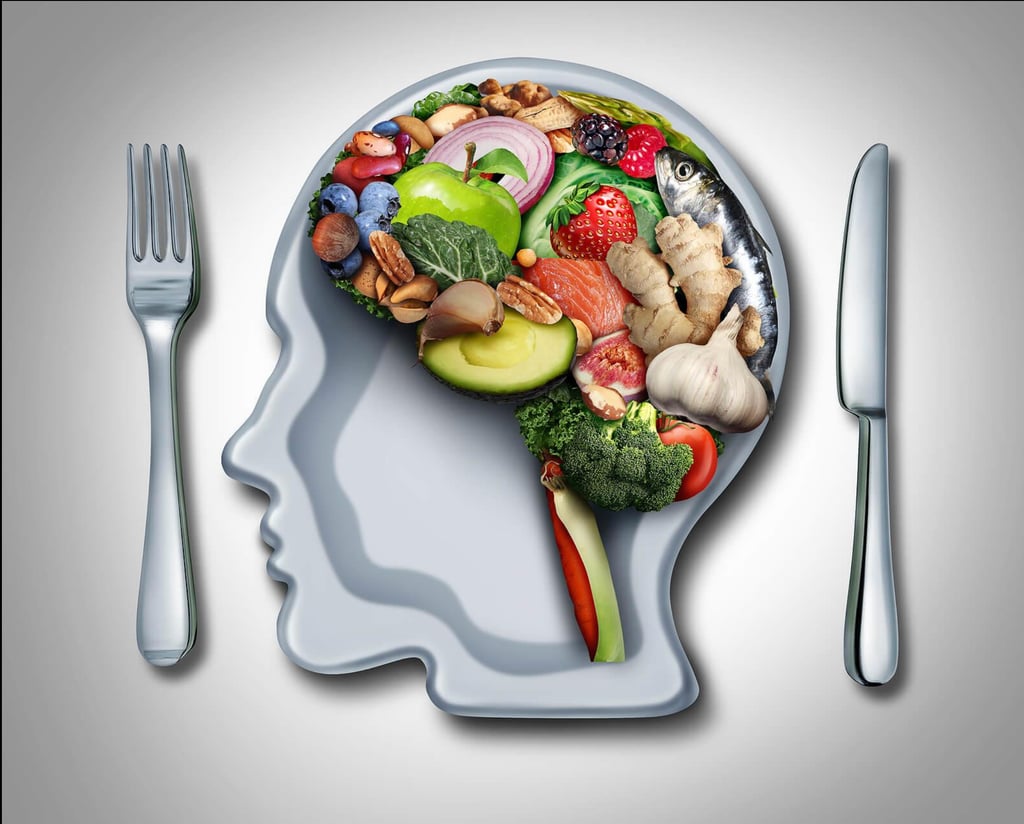
By the time someone arrives at a highly structured diet, regardless of whether it is plant-based, carnivore, elimination-based, or framed as “clean eating” the experience often feels strikingly clear. Something changes for them, and they attribute it to their diet. Their symptoms improve, they have more energy and vitality. They may see decreases in things like anxiety, or even depression. They will even say that their digestion forms a more predictable pattern.
And from that experience, a conclusion tends to form almost automatically.
This diet fixed me. And if it fixed me, then the logic seems straightforward to them.
The food was the problem, and their changes were the solution. But that conclusion is missing something that I think is part of the bigger picture.
Because in many cases, what actually changed was not just the food. It was the regulatory state of the system consuming the food.
And that distinction changes everything.
Diet Is Often a Proxy for Regulation
One of the most overlooked dynamics in nutrition is that dietary patterns are rarely just nutritional strategies.
They are also regulatory strategies. And if you have ever tried to have a conversation with someone who is on an extreme nutritional path about it, you might start to see how that is.
Food is not chosen in a vacuum. It is chosen inside a nervous system that is already in a particular state of activation, arousal, and constraint. Most people feel despiration when they turn to “root cause” diets and nutritional trajectories. And it is that state determines what feels tolerable, what feels overwhelming, what feels safe, and what feels uncertain or threatening.
So when someone adopts a highly structured diet, something important often happens before digestion even becomes relevant.The system itself becomes more predictable. And predictability is not a psychological detail.
It is a physiological input.
The nervous system is fundamentally a prediction system. It is continuously evaluating internal and external signals for safety, threat, and uncertainty, adjusting bodily systems accordingly. When dietary inputs become simpler, more repetitive, and more controlled, the system often interprets that reduction in variability as a reduction in threat.
And in response, it shifts… not just mentally, but biologically.
This shift feels more stable…. the changes support the system while it downregulates. And this shift is what is often perceived as “healing.”
But what is actually happening is more specific than that.
The organism is becoming easier to regulate.
What We Call “Diet Effects” Is Often State-Dependent Physiology
If we step back from food debates entirely, something becomes visible that is often missed when nutrition is treated as a purely biochemical discipline.
The body is not responding to food in isolation. It is responding to a combined system of state, food, and context operating together.
This is where many nutritional interpretations begin to collapse into oversimplification. Because the same meal can produce radically different outcomes depending on autonomic nervous system tone, stress load at the time of eating, behavioral context such as speed and attention, perceived safety or threat, and even prior physiological state.
In other words, food is not the only variable being processed. The organism is simultaneously processing itself. And that shifts the entire meaning of dietary outcomes.
What looks like a food effect is often a state effect expressed through food.
This Is the Framework I’ve Been Developing
This is where my recent work becomes directly relevant.
In my third published manuscript, Nutrient Ecology and Nervous System Regulation: A State-Dependent Framework for Human Nutrition and Digestion (Staggs, 2026), I propose a unified model that reframes nutrition as a state-dependent ecological system rather than a static biochemical input problem.
The core premise is simple, but it changes how we interpret nearly everything discussed in this series.
Digestion and metabolism are not fixed responses to food.
They are gated processes shaped by autonomic nervous system state.
Within this framework, nutrient availability operates as the ecological layer. Behavioral selection functions as the interface layer. Autonomic regulation serves as the gating mechanism. And metabolic output emerges as the downstream expression of those interacting systems. These layers are not separate domains operating independently.They are continuously interacting components of a single regulatory system. And once that is recognized, the way we interpret dietary outcomes begins to shift.
Why This Matters for the Diet Debate
Once state is introduced into the equation, something important happens. The entire “this diet works versus this diet doesn’t work” debate becomes underdefined.
Because now it becomes clear that multiple, seemingly opposing dietary patterns can produce similar outcomes through similar mechanisms.
The Carnivore diet can stabilize a dysregulated system.
Plant-based diets can also stabilize a dysregulated system.
Elimination diets often produce benefit through the same structural mechanism.
Even “clean eating” frameworks can reduce cognitive and physiological load in ways that improve subjective health.
But none of these outcomes automatically tell us anything definitive about long-term human nutritional requirements. They tell us something narrower and more precise.
They show what reduced system load looks like under constraint. And that distinction is where most nutritional arguments break down. Because symptom relief is not equivalent to evolutionary optimization.
And stabilization is not the same as long-term adaptability.
The Nervous System Was the Missing Variable All Along
One of the central implications of this integrated framework is that digestion is not simply a chemical process triggered by ingestion.
It is a neurophysiological state transition process.
Parasympathetic dominance facilitates digestive enzyme secretion, gut motility, nutrient absorption, and metabolic assimilation. The nickname for this aspect of the Automic Nervous System is "rest and digest", and I feel like although it seems to be in the forefront of this system there are overlooked implications of this particular characteristic of the role.
Sympathetic dominance suppresses those same processes in favor of systems associated with vigilance, mobilization, and threat response. When we are in a sympathetic response, the body focuses on certain organ systems that are involved with survival. Digestion is slowed, and even stopped until the threat has passed. But modern life is causing chronic low level sympathetic activation, and we need to start looking at how that is actually impacting the absorption of the nutrition, not just what is being eaten.
This actually means that identical foods can produce entirely different physiological outcomes depending on the nervous system state in which they are consumed.
So when people report dramatic improvements from dietary change, what is often being measured is not just a change in food inputs. It is a change in how the system is organized at the moment those inputs are processed.
This is the piece that is most often missing in nutritional interpretation.
Because we tend to attribute outcomes to what changed externally, rather than what shifted internally.
Why This Changes the Meaning of “Healing Diets”
When this lens is applied, something subtle but important becomes apparent…. Diets are no longer primarily understood as healing agents.
They actually become regulatory environments. They can reduce cognitive load. They can reduce sensory complexity. They can reduce decision fatigue. They can increase predictability. They can stabilize autonomic tone. And through those pathways, they can produce meaningful improvements in symptoms.
But the mechanism is not purely nutritional.
It is state stabilization under reduced complexity.
Which also explains several patterns that are commonly observed but poorly explained within traditional dietary frameworks. Opposing diets can both appear effective. Results can be dramatic but not always durable.
Individuals often cycle between extremes in search of stability.
And symptom relief does not always generalize once the dietary structure changes. The system is not responding only to food.
It is responding to how constrained or regulated it becomes while interacting with food.
Nutrition as an Ecological–Neurophysiological System
When nutrient ecology is combined with nervous system regulation, a different model emerges than the one dominating most nutritional discourse. Not the question of what foods are inherently good or bad, because realistically, organically grown whole food can be both or neither depending on the state of the person eating it. If digestion is interupted by sympathetic dominance then what is biologically available will be influenced by that.
So we need to start looking at under what conditions does the human system process this variability effectively?
This changes everything.
Diet becomes context-dependent rather than absolute.
Digestion becomes state-dependent rather than fixed.
Symptoms become system-level signals rather than isolated food reactions.
And food becomes one variable within a much larger regulatory field.
Which brings the pattern across this entire series into focus. Plants were not the problem, and the Carnivore diet is not the solution.
And diets do not work solely because of food composition.
They do work because they change the state of the system processing that food.
Where this is going
Across these three essays, a single through-line has become difficult to ignore. We have been treating diet primarily as a question of composition.
But in reality, it is a question of regulation under variability. Once that shift happens, the entire debate reorganizes itself.
Because the most important question isn’t about the actual diets or what should humans be eating to maintain their optimal health.
The discussion becomes something far more foundational.
We need to start looking at what conditions allow a human system to remain flexible while processing ecological variability without collapsing into rigidity?
That is the question my manuscript begins to address directly.
And it is the framework I will continue building from here.
Not by narrowing the conversation to food alone.
But by expanding it to include the very system that eats it.
If you enjoyed this article, make sure that you check out parts 1 and 2 of the series:
Or you can check out my initial articles on human nutrition: