
Why We Keep Getting Human Diet Wrong — Part 2
Carnivore Isn’t Evolution — It’s Elimination: An evidence-informed analysis of the carnivore diet as a therapeutic elimination protocol, examining ketosis, gluconeogenesis, protein load constraints, microbiome diversity, and the distinction between symptom relief and optimal physiology.
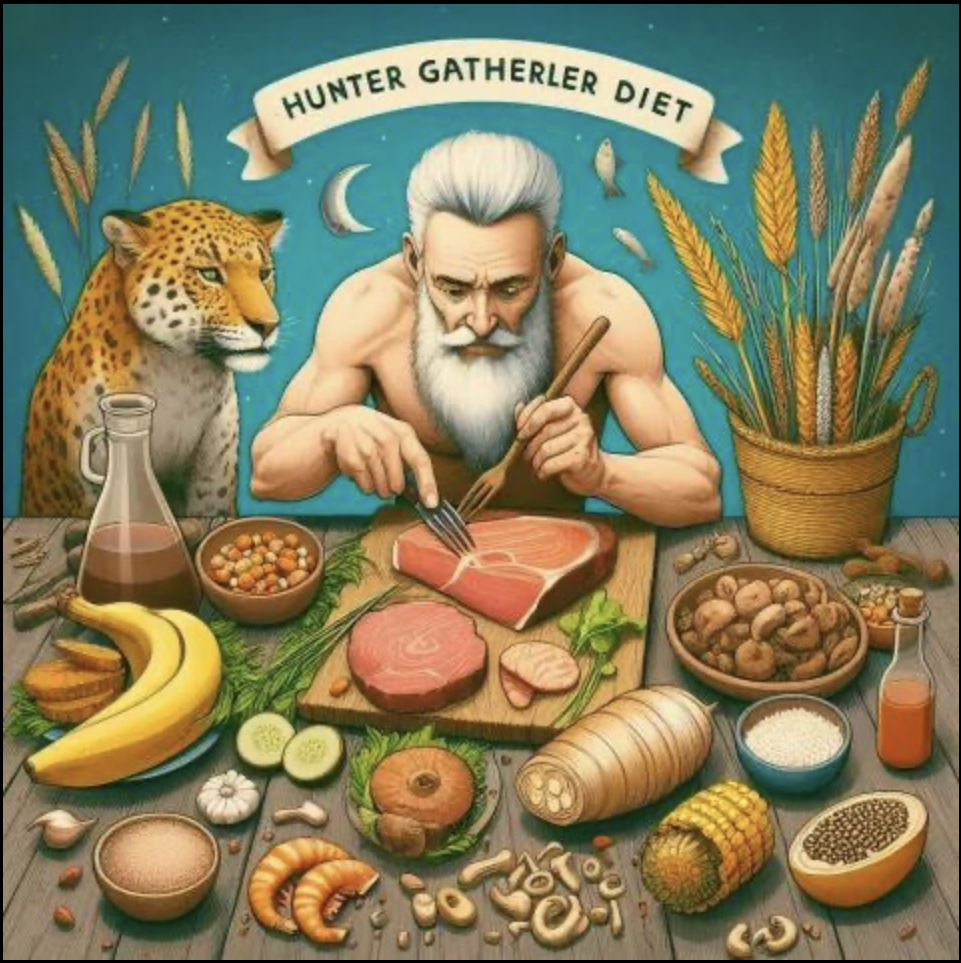
In part 1 of this series we started talking about certain conversation topics that you might hear when nutrition comes up…. And plants aren’t the only topic of interest.
There are other “diets” that people love to discuss and the one we are breaking down today is actually one of my favorites (please insert sarcasm here). The carnivore diet is becoming increasingly popular, and in my opinion that is for all the wrong reasons. Every time this “diet” comes up the first thing I hear after “I am eating a carnivore diet” is “and I am doing it because that is what our ancestors did.”
And let me be the one to say this right now: No, they absolutely did not eat what is being called “the carnivore diet”.
Here is the thing about this particular diet… people adopt it and within weeks, sometimes days, they feel dramatically better.
Digestive symptoms improve.
Inflammation decreases.
Energy stabilizes.
Mental clarity returns.
For many individuals, the shift feels undeniable.
And from that experience, a conclusion often follows almost immediately:
This must be how humans are meant to eat.
But that conclusion moves faster than the biology can support.
Because it skips the most important question:
What actually changed?
The Experience Is Real. The Interpretation Is Not Always.
The first and most important point is that the reported effects of carnivore-style diets should not be dismissed.
For a subset of individuals, particularly those with chronic digestive issues, inflammatory conditions, or metabolic instability, carnivore can produce noticeable improvements in a short period of time.
There are multiple reasons for this.
The most immediate is that carnivore functions, in practice, as a highly structured elimination protocol. It removes a wide range of variables simultaneously:
Plant compounds that may be irritating in certain physiological contexts
Ultra-processed foods and additives
Dietary fiber and fermentable substrates
Glycemic variability from carbohydrates
At the same time, it simplifies food intake to a narrow set of inputs and reduces decision complexity around eating. In a system that is already dysregulated, this reduction in complexity can produce rapid relief. And that relief is real, but relief is not the same as resolution.
It is a change in system load, not necessarily a discovery of optimal human design.
Elimination Is Not Evolution
One of the central errors in modern dietary interpretation is the conflation of two very different concepts:
Short-term physiological response and long-term evolutionary adaptation.
Carnivore diets clearly belong in the first category, but there is no strong evidence that they belong in the second.
Human diets across evolutionary and geographic contexts have never been singular. Even in populations where animal foods made up a large proportion of caloric intake, diets still included variability. These diets included elements like organ meats, connective tissues, bone marrow, and in many cases seasonal plant inputs. Arctic diets are one's that many people who promote the carnivore diets point to as examples of "only meat" based eating, but they fail to realize that their diets did include things like seaweed and kelp, which are indeed plants.
In other less extreme environments, plant foods dominated. Roots, tubers, seeds, fruits, and leafy vegetation formed substantial portions of caloric intake depending on ecological availability.
What does not appear in the anthropological record is a consistent, long-term pattern of exclusive reliance on a single food category.
This matters because evolution does not optimize for short-term symptom relief.
It shapes systems through repeated exposure to environmental variability over long time scales.
Carnivore, by contrast, is defined by reduction, not by variability.
Why Carnivore Works (Mechanistically, Not Ideologically)
To understand the carnivore diet accurately, it is more useful to examine its mechanisms than its narrative.
Several overlapping effects help explain why people often feel better on this diet.
First, removal of potential irritants.
For individuals with compromised gut integrity or immune dysregulation, reducing exposure to a wide range of dietary antigens and bioactive plant compounds can lower symptom burden.
Second, digestive simplification.
A narrow food range reduces enzymatic demand, fermentation variability, and gut motility fluctuations. Fewer inputs mean fewer opportunities for reactive responses.
Third, glycemic stabilization.
The absence of dietary carbohydrates reduces blood glucose variability. For some individuals, this stabilizes energy levels and reduces downstream stress signaling.
Fourth, behavioral reduction of complexity.
Food decisions become minimal. This decreases cognitive load and can reduce stress around eating.
Each of these factors contributes to the subjective experience of improvement.
But none of them require the conclusion that carnivore represents an optimal or evolutionarily intended human diet.
They demonstrate something more modest and more important:
Reducing variables can stabilize a stressed system.
Ketosis: A Normal State, Not a Dietary Identity
One of the most common arguments in favor of carnivore is that it places the body into ketosis, which is often framed as a “natural” or even superior metabolic state.
There is truth in the fact that ketosis is a normal human physiological process.
Humans can produce ketone bodies from fatty acids when dietary carbohydrate intake is low or when glycogen stores are depleted. This metabolic flexibility is adaptive and would have been essential during periods of food scarcity, seasonal variation, and fasting.
However, ketosis is not evidence of dietary primacy. It is evidence of metabolic adaptability.
Human physiology is not designed around a single fuel source. It is designed to shift between fuel sources depending on availability and demand.
Glucose metabolism and fat metabolism are not competing systems. They are complementary ones.
Framing ketosis as the “intended” human state confuses a backup energy system with a default operating mode.
That distinction matters, because evolutionary biology does not select for extremes. It selects for flexibility.
The Forgotten Constraint: Protein Load and Fat Dependence
Another often-overlooked aspect of animal-based diets is the physiological limitation of consuming excessive lean protein without adequate fat.
Historically referred to as “rabbit starvation,” this phenomenon occurs when protein intake exceeds the body’s ability to metabolize it safely in the absence of sufficient fat or carbohydrate energy sources.
Symptoms reported in both indigenous knowledge and early exploratory records include fatigue, nausea, diarrhea, and metabolic distress when diets consisted predominantly of very lean meat.
The underlying mechanism is straightforward: protein can be converted into glucose via gluconeogenesis, but this is energetically costly and metabolically constrained. Without adequate fat intake, the body cannot efficiently meet energy demands using protein alone.
This is why traditional animal-based diets—where they existed—did not consist solely of muscle meat.
They emphasized:
Fat-rich tissues
Organ meats
Bone marrow and connective tissue
Modern reductions of carnivore to “steak and salt” overlook this entirely.
And in doing so, they often reconstruct a dietary pattern that has never existed in stable long-term human ecology.
What Gets Lost in Long-Term Elimination
Short-term improvement does not always translate into long-term optimization.
Over time, highly restrictive dietary patterns may reduce exposure to several key biological inputs.
One of the most significant is microbiome diversity.
The gut microbiome depends heavily on dietary substrates—particularly fibers and plant-derived compounds—to maintain functional diversity. When these inputs are removed, microbial composition often shifts toward a narrower functional range.
This does not necessarily produce immediate symptoms. But it can alter the system’s capacity over time.
Another loss is polyphenol exposure.
These compounds, found primarily in plants, influence cellular signaling, oxidative stress responses, and inflammatory pathways. While not essential in the classical nutritional sense, they contribute to regulatory complexity in human biology. This is the basis for something called hormesis, which we also discussed in part 1.
Finally, there is the broader loss of dietary variability itself.
Variability is not just a cultural feature of human diets. It is a biological input that supports adaptability. Systems exposed to a range of inputs tend to develop broader tolerance ranges.
Systems exposed to narrow inputs tend to become more specialized—and sometimes more fragile when conditions change.
Symptom Relief Is Not the Same as Optimal Function
This distinction is central to interpreting dietary outcomes accurately.
But what we need to remember is that a diet can reduce symptoms and still be incomplete. And strategy can stabilize a system without reflecting its full adaptive capacity. The carnivore often works because it reduces exposure, simplifies digestion, and stabilizes metabolic inputs. Not because it is biologically correct.
Stabilization is not the same as expansion, and relief is not the same as resolution. Just as with many other aspects of health and healing, just because the triggers are not there doesn't mean that the root cause is gone.
When a system is dysregulated, reducing complexity can feel like healing because it lowers demand on compromised pathways.
But that does not necessarily mean the system has regained its full functional range.
It may simply mean it is operating within a narrower, more controlled window. And the problem was never the problem in the first place.
Looking at this Differently
Carnivore is not a misunderstanding in the sense that it produces no real effects. The effects are real and often significant.
The misunderstanding is in what those effects are interpreted to mean.
What is often labeled as an “ancestral diet” is more accurately described as a therapeutic elimination strategy that reduces biological variability.
That distinction is not semantic. It changes the entire conclusion.
Because elimination strategies can be powerful tools in restoring stability to dysregulated systems.
But they do not necessarily define the conditions under which human physiology evolved to operate over time.
What's Next?
If both plant-focused restriction and animal-only diets can produce meaningful improvements in health outcomes, then the explanation cannot simply be “this food is good” or “this food is bad.”
Something else is being modulated.
And that something is not just digestion, inflammation, or metabolism.
It is the structure of the system itself—how it responds to complexity, variability, and regulation.
That is where we go next.
Part 3: The Real Reason Diets ‘Work’ Has Nothing to Do With Food
If you haven't read part 1 of this series you can check it out here:
And you can also check out my article on Human Diets from an Evolutionary perspective here: