
The Grandmother Hypothesis, Co-Regulation, and Why Humans Were Never Meant to Raise Children Alone
My work is a reflection of my life, and with that this weeks topic is a personal and scientific exploration of the Grandmother Hypothesis, co-regulation, and Socio-Physiological Dysregulation Theory (SPDT). We examine how grandmothers contribute to human survival, nervous system resilience, intergenerational continuity, and the role of ecological memory and flowers in processing grief.
ORGANIC LIVINGNEUROSCIENCEEVOLUTIONARY MEDICINESPIRITUALITYANTHROPOLOGYNERVOUS SYSTEM HEALING
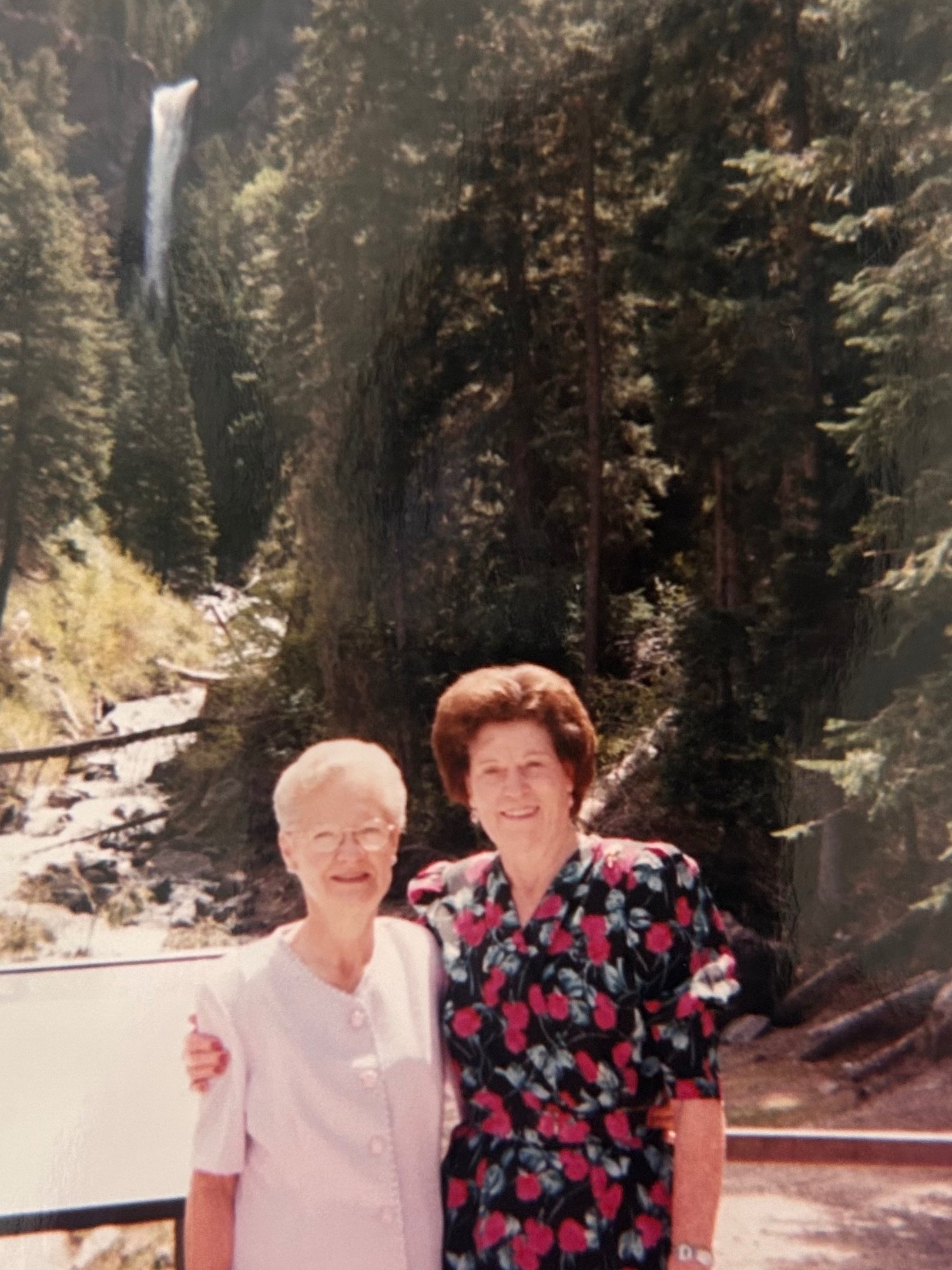
For the past several days, I have been moving through the quiet disorientation that follows the loss of a grandparent. My last grandparent has left this world, and with her passing, something subtle but profound has shifted in the way the world feels. It is difficult to explain the particular kind of grief that accompanies the death of a grandparent when the relationship has been close. In my experience, the grief is not only for the person themselves, but for the sense of continuity they embodied. Grandparents often serve as living bridges between worlds linking past and future, carrying stories, transmitting values, and stabilizing families during periods of transition.
When a grandparent dies, something more than a person is lost. A layer of continuity disappears, and a relational anchor shifts.
Often, the nervous system feels this change long before the intellect can name it. I was able to go and see my grandma one last time in December when she was initially put on hospice. Keenan and I spent time sitting with her, and pushing her around outside in the sunshine in her wheelchair. Looking back now the feelings started then, and grew over these past few months.
I have been very fortunate in this life. I did not only have close relationships with my grandmothers, I was also close with two of my great-grandmothers. I grew up within a multigenerational web of care that included stories, shared land, gardens, meals, and long afternoons spent outdoors.
When I reflect on my childhood memories with my grandmother, I do not simply remember events. I remember sensations. The smells, laughter, and adventures. The mud caked on my shoes, and coming in and out of the back door all day long. Fishing for minnows in the creek with my cousin. Sleeping on the living room floor together after long days playing outside, catching grasshoppers for my grandma. She paid us 5 cents a piece because they ate her plants and flowers.
She would make dolls from hollyhocks with careful hands so we could play with them until the petals wilted and went limp. Flower petals make the most beautiful dresses when you turn the flowers upside down. I remember we had “gowns” of every color.
We watched my grandmother tend to her flowers with the quiet devotion that often accompanies people who understand the rhythms of living systems. Her iris bloomed in careful rows shaded by her beautiful rose bushes along the driveway every spring.
They were her favorite.
At the time, these moments felt so ordinary. I am rapidly realizing that developmentally, they were anything but ordinary. These moments were part of regulatory environments. They were experiences of safety, continuity, and relational presence during the most plastic periods of my own nervous system development.
They were part of an ancient pattern of human caregiving that anthropology has only relatively recently begun to articulate explicitly.
One of the most compelling frameworks for understanding the importance of grandmothers in human evolution is known as the "Grandmother Hypothesis".
The Grandmother Hypothesis proposes that human beings evolved unusually long lifespans (particularly extended post-menopausal lifespans in women) because grandmothers increased the survival probability of their grandchildren. In other words, grandmothers contributed to the evolutionary success of our species. Unlike most mammals, human females often live for decades beyond reproductive age.
From a purely reproductive standpoint, this initially puzzled evolutionary biologists.
Why would natural selection favor a long post-reproductive lifespan?
One answer is that grandmothers provided incredible adaptive advantages to their families.
They helped feed children. They helped watch children. They helped teach children.
They allowed mothers to recover physically from pregnancy and childbirth more quickly. Children of toddler age could be weaned and cared for by their grandmothers which also allowed mothers to have more offspring, which added to the odds of that linages survival since in that time period child mortality was extremely high. Most families lost more children than survived.
They contributed ecological knowledge about food sources, medicinal plants, seasonal patterns, and social relationships. They provided continuity during periods of disruption. They increased the probability that children survived to reproductive age themselves.
In evolutionary terms, this all matters tremendously.
Humans actually have one of the longest childhoods of any species. Our brains take decades to fully mature. Compared to other prey animals human offspring are incredibly vulnerable to predation, and to malnutrition for years. Human children are not able to fend for themselves for at least a decade. This extended developmental period allows for remarkable cognitive flexibility and cultural complexity, but it also creates vulnerability.
Children require sustained care for many years, and no single parent nervous system was ever designed to carry this burden alone.
Humans evolved as something called "cooperative breeders".
Caregiving has always been distributed across kin networks. Grandmothers have historically played a central role in this distribution of care. When viewed through the lens of nervous system science, the significance of this becomes even clearer. Human infants are born neurologically unfinished. The autonomic nervous system continues developing after birth, shaped by repeated experiences of safety, connection, and environmental predictability.
This process is often described as co-regulation.
Co-regulation refers to the process by which one nervous system helps stabilize another. Caregivers regulate infants through touch, voice, facial expression, rhythm, and presence.
Heart rates synchronize. Breathing patterns coordinate. Stress hormones decrease. Neural pathways associated with safety become more robust. Over time, these repeated co-regulatory experiences become internalized as self-regulation capacity. We literally learn how to feel safe through relationship. When caregiving responsibility is distributed across multiple stable adults, the probability that a child experiences consistent regulation increases significantly.
Grandmothers increase the regulatory bandwidth of a family system. They allow parents to rest. They provide buffering during times of illness, stress, or resource scarcity. They transmit relational knowledge. They stabilize developmental environments. Above all, they create continuity.
When viewed this way, the Grandmother Hypothesis is not only about caloric provisioning or childcare logistics.
It is about nervous system resilience across generations. It is about the preservation of regulatory capacity within kin networks. It is about the continuity of embodied knowledge.
These patterns remain visible today, even within modern cultural contexts that often obscure the cooperative nature of human caregiving.
After my son was born, my own mother moved in with me for nearly six months. I stayed awake with him during the early part of the night, breastfeeding and learning the rhythms of caring for a newborn. At 4am each morning, my mother would wake and take over so I could sleep. She would sit and rock him in the quiet early hours. He settled most easily in her arms. Her nervous system regulated his, and her presence regulated mine. Without her help, my postpartum recovery would have looked very different.
This is the grandmother pattern continuing across generations.
Not as an abstract concept, but as lived physiology. As distributed regulation, and as shared caregiving load. As a continuous line of support.
My son developed a relationship with his great-grandmother as well. He pushed her wheelchair during visits. He spoke with her. He learned her rhythms. She knew him, and he knew her.
These connections matter more than we often recognize.
From the perspective of Socio-Physiological Dysregulation Theory (SPDT), the stability of social systems is inseparable from the regulatory capacity of the nervous systems within them.
When individuals are chronically dysregulated, perception narrows. Cognitive flexibility decreases. Threat detection increases. Cooperation becomes more difficult. Social fragmentation becomes more likely.
Conversely, when individuals experience reliable co-regulation, cognitive bandwidth expands. Perspective taking improves. Trust becomes more accessible. Collective coordination becomes more possible. Kin networks function as regulatory ecosystems.
Grandmothers are keystone regulators within those ecosystems.
They extend the temporal depth of relational stability.
They transmit practices that preserve coherence across generations.
They maintain threads of continuity that reduce fragmentation during periods of change.
From an anthropological perspective, multigenerational living arrangements were common throughout most of human history. Children grew up surrounded by grandparents, aunts, uncles, cousins, and siblings. Caregiving was distributed. Knowledge transmission was embodied and experiential.
Children grew up surrounded by grandparents, aunts, uncles, cousins, and siblings. Caregiving was distributed. Knowledge transmission was embodied and experiential.
Identity formed within relational webs rather than isolated nuclear units.
Modern industrialized societies have shifted away from many of these structures. Families are often geographically dispersed. Parents are frequently expected to manage caregiving responsibilities with limited support. Many individuals move away from extended kin networks in pursuit of education or employment opportunities.
While these changes have provided certain freedoms, they have also increased the caregiving burden on individual nervous systems.
Many parents today are attempting to perform a cooperative species strategy alone.
From a physiological standpoint, this creates strain.
From a cultural standpoint, this increases fragmentation.
From a developmental standpoint, this reduces opportunities for distributed co-regulation.
The loss of multigenerational continuity can be felt not only emotionally, but biologically.
Grief is also a regulatory process.
When someone who has served as a stabilizing presence in our lives dies, the nervous system must reorganize.
The relational map shifts. Patterns of expectation change. Memory becomes more active.
We revisit sensory traces of shared experiences, and we seek ways to maintain the connection.
One of the ways humans have historically navigated grief is through relationship with the living world.
Plants, landscapes, and seasonal cycles often serve as anchors for memory. Ecological relationships provide continuity beyond individual lifespan.
My grandmother loved flowers. She grew roses, hollyhocks, and many others.
But iris were always her favorite. I remember the careful rows of iris along her driveway. Their blooms marked seasonal transitions.
Their presence was consistent. They returned each year.
Plants provide a unique form of continuity because they exist across time scales that extend beyond individual human lifespans.
They persist. They regenerate. They carry genetic lineages forward.
When we propagate plants from cuttings, bulbs, or rhizomes passed down through families, we participate in living continuity.
Ecological memory becomes embodied.
The nervous system recognizes patterns of color, scent, texture, and seasonal timing.
Grief becomes integrated through relationship with ongoing life.
Planting flowers for someone who has died is not merely symbolic. It is participatory and relational. It is also regulatory.
The act of tending living systems can stabilize attention, reduce sympathetic activation, and increase parasympathetic tone.
Gardening involves rhythmic movement, sensory engagement, and interaction with complex biological environments.
These experiences support nervous system regulation. They restore a sense of continuity, and they allow our memories to remain dynamic rather than static.
In the coming weeks, I will be planting iris. Some will come from local growers adapted to this environment.
And some will come from lineage connected to my grandmother’s gardens.
This feels incredibly meaningful to me. Not only emotionally, but physiologically.
Continuity does not only exist in thought.
It exists in relationship.
The grandmother pattern continues. Not only through memory, but through caregiving. Through the plants.
Through the ways we support the next generation, and the ways we allow ourselves to be supported.
Humans did not evolve to raise children alone. We evolved within networks of shared care.
We evolved with grandmothers, and we evolved with continuity.
We evolved with distributed regulation.
My grief reminds me of the importance of these connections because it reveals how much stability they provided. My grandmothers are a part of the architecture of my nervous system. Their love helped me learn about relationship to others, and to my environment. Their presence shaped my early environments. My childhood is full of memories of my grandmothers love.
Their care contributed to my sense of safety.
My grandmothers absence is felt because her presence mattered.
And the pattern continues.
In my relationship with my son, and in my relationship with my mother. In the flowers that will bloom this spring. The continuity she represented does not disappear. It transforms.
Grandmothers remain part of human survival not only because of the care they provided while living, but because of the relational patterns they help establish across generations.
These patterns persist. They shape how we care for each other. They shape how we respond to stress. They shape how we build cultures.
They shape how we remember what it means to belong to something larger than ourselves.
I am deeply grateful for the time I had with my grandmother.
For the mud on my shoes.
For the flower dolls.
For the steady presence of someone who understood how to tend living things.
For the continuity she helped create.
And for the reminder that humans have always needed each other in order to thrive.
We still do.