
Decoding Your Body's "GPS": How Proprioception Shapes Our Reality, Part 1
Discover how proprioception (the body’s internal GPS) shapes your sense of self, orientation, and regulation. Learn how fascia, joints, cranial nerves, vestibular input, and auditory signals work together to map your body in space, and why restoring this internal map is essential for nervous system health, emotional balance, and stress resilience.
HEALTH COACHING NEUROSCIENCEEVOLUTIONARY MEDICINECHRONIC DISEASEALTERNATIVE HEALTHHOT TOPICS IN HEALTHNERVOUS SYSTEM HEALING
If you’re new to the concept of proprioception, you may want to start with What Is Proprioception? The Nervous System’s Hidden Sense of Self, which explains how the brain builds a body map and why this sensory system matters for regulation.
We tend to talk about perception as if it is something that lives in our heads..... Things like our vision, cognition, and personal interpretation. But orientation happens before perception becomes thought. Long before you narrate your experiences, your nervous system is already answering a more basic question:
Where am I, in relation to myself and the world?
That question is answered through what is called proprioception.
Not metaphorically. Neurophysiologically.
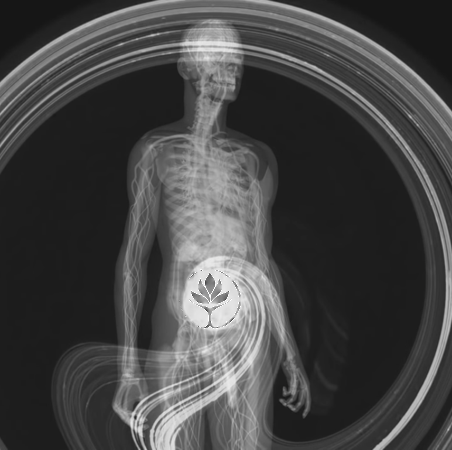
Proprioception is not just a sense of direction and movement. It is a distributed body wide orientation system that integrates fascia, joints, muscles, cranial nerves, vestibular input, and even auditory information to generate a moment‑by‑moment map of the self in space.
That map quietly shapes regulation, meaning, and behavior.
First, proprioception is not the same thing as orientation, but it is foundational to it.
Proprioception actually maps the body to itself... That map looks like limb position, load, pressure, and movement. Orientation then emerges when that internal map is integrated with vestibular, visual, and auditory information to locate the body in space and in context.
When proprioceptive signals are clear, orientation is stable and largely unconscious. When they are degraded, the nervous system compensates by relying more heavily on vision, vigilance, and cognitive prediction. What we often call “scanning” is not heightened awareness.
It is a sign that internal mapping has become unreliable.
Proprioception Is a System, Not Just a Sense
Proprioception is often reduced to "knowing where your limbs are." That definition is incomplete.
In reality, proprioception is an integrative signaling network composed of multiple sensory channels working together:
Muscle spindles detect length and rate of change in muscles
Golgi tendon organs detect force and load
Joint receptors signal compression, traction, and end range
Fascial mechanoreceptors detect tension, shear, vibration, and global body shape
Vestibular receptors orient the body to gravity and acceleration
Auditory and vibrational input contribute to spatial mapping
Cranial nerves coordinate movement, posture, breath, chewing, swallowing, and orientation
This information does not travel to a single "proprioception center." It is integrated across the spinal cord, brainstem, cerebellum, and cortex.... well below conscious awareness.
You are not thinking your way into orientation. You are being organized into it systematically.
Fascia: The Body-Wide Signal Carrier
Fascia deserves special attention here. And not just because I Love Yin yoga.
Fascial tissue is densely innervated with mechanoreceptors and forms a continuous, tension‑based network throughout the body. It does not merely transmit force.... it transmits information. I like to think of it like a body wide antenna, constantly picking up signals and sending them to our nervous system.
Because fascia links distant regions of the body, proprioceptive signals are rarely local. A change in foot pressure alters pelvic tone. Tongue placement and jaw tension affects cervical orientation. Rib movement influences postural stability.
From a nervous system perspective, fascia provides:
Global body mapping
Continuous feedback about load and support
Early warning signals for instability or threat
When fascial signaling is coherent, the nervous system receives a clear message: the body is held together, supported, and responsive.
When it is disrupted, either through injury, immobility, chronic stress, or trauma the internal map degrades.
Cranial Nerves and Orientation
Proprioception is inseparable from the cranial nerves.
Several cranial nerves play direct roles in orientation and regulation:
Trigeminal nerve (CN V): jaw position, chewing force, facial sensation, head orientation
Vestibulocochlear nerve (CN VIII): balance, spatial orientation, auditory mapping
Vagus nerve (CN X): visceral state, breath, heart rate, safety signaling
Accessory nerve (CN XI): head and shoulder positioning
Hypoglossal nerve (CN XII): tongue position, swallowing, airway tone
These nerves do not operate independently. They form a coordinated network that links posture, breath, jaw, voice, and movement.
This is one reason activities like chewing, humming, slow head movements, or resisted swallowing can have disproportionate effects on nervous system regulation.... They feed orientation data directly into the brainstem.
Proprioception as a Regulator of State
From a regulation standpoint, proprioceptive input is uniquely stabilizing.
Unlike visual or cognitive input, proprioceptive signals are:
Slow and continuous
Load‑bearing and pressure‑based
Difficult to fabricate or override
This makes them especially effective at shifting nervous system state.
Clear proprioceptive input tends to:
Reduce sympathetic overdrive
Increase parasympathetic tone
Improve emotional containment
Restore a sense of internal boundary
Conversely, weak or inconsistent proprioceptive signaling forces the system to rely on faster, less reliable inputs. Senses like vision, and vigilance or cognition. Regulation becomes effortful, and safety becomes something to manage rather than something to sense.
Orientation Comes Before Interpretation
This is the critical point.
The nervous system does not interpret reality first and then regulate. It orients first.
Before meaning, there is mapping. Before the story, there is position. Before identity, there is coherence.
A nervous system that cannot accurately locate itself in space will struggle to:
Feel safe
Sense boundaries
Initiate or inhibit action
Settle attention
Much of what we label as anxiety, dissociation, or overwhelm is better understood as orientation failure, not psychological defect.
Why Modern Life Disrupts the Internal GPS
Modern environments deprive us of the inputs that keep proprioception calibrated:
Prolonged sitting reduces joint compression
Screens dominate visual input while dampening body awareness
Chronic stress stiffens fascia and narrows movement options
Trauma fragments internal mapping
The result is a nervous system that is under‑informed about the body and over‑dependent on cognition.
When orientation degrades, the mind tries to compensate.
It thinks. It monitors. It worries.
Not because it is broken..... but because it lacks reliable location data.
Restoring the Body’s GPS
Rebuilding proprioceptive clarity is not about insight. It is about signal quality.
Effective inputs include:
Slow, resisted movement
Joint compression and traction
Weight bearing and load transfer
Chewing and jaw engagement
Bilateral, coordinated actions
Contact with varied surfaces
These inputs update the internal map.
They tell the nervous system: this is where you are; this is how much force you can apply; this is what support feels like.
Regulation follows orientation, not the other way around.
The Deeper Implication
Proprioception does not just shape movement. It shapes reality.
Your sense of agency, coherence, and self‑trust depends on whether your nervous system can reliably locate you in your body.
When the internal GPS is clear, the world feels navigable. When it is distorted, everything feels harder than it needs to be.
This is not a mindset issue. It is an orientation issue.
And that distinction matters.
This article is part of a 3-part series on proprioception and nervous system awareness.
Part 2: When Orientation Fails: Scanning, Hypervigilance, and Rebuilding Internal Maps
Part 3: Orientation and Truth: What a Regulated Nervous System Does Under Pressure